

How Hip Hop Fashion Evolved To What It Is Today
Hip-hop fashion evolved from meager means in the Bronx to the current status quo, as one of the biggest cultural arbiters that reaches from streetwear to couture. Hip hop fashion’s journey is much about self-expression and rebellion. From oversized jeans and track jackets to diamond chains and exclusive sneakers, hip hop fashion tells the story of how Black culture has shaped global trends for decades.
Outfits By The Decade
From Street Style to High Fashion
Fashion has always been an integral part of hip-hop culture and is one of the strong ways of self-expression. Hip-hop fashion has made its journey from the most impoverished streets of Bronx to luxurious runway shows in Paris, from practical attire for breakdancers and b-boys to a global trend that mixed urban streetwear with high-end luxury. Hip-hop clothing speaks to individual and cultural identity in its own way through the decades. Let’s take a short trip through some important movements in hip-hop fashion.
70’s


80’s


90’s


2000’s


2010s


1970s: The Birth of Hip Hop Style
Hip-hop fashion first showed up in the late 1970s and was born from practical, comfortable clothes meant for breakdancing and b-boying on the streets of the Bronx. Adidas tracksuits, loose T-shirts, bomber jackets, leather jackets, and baggy pants were integral to this look. The artists Kool Herc and Grandmaster Flash played significant roles in creating this urban style by focusing on streetwear that demonstrated a working-class ethos. It may not have been mainstream at this point, but the base had been set for hip hop to take over fashion. Footwear, like the Adidas Superstar, derived their popularity from a functional standpoint and was connected to the developing identity of the culture.
1980s: The Mainstream Breakthrough
As hip hop gained visibility in the 1980s, its fashion began to catch the attention of the mainstream. Adidas tracksuits, popularized by Run-D.M.C., became synonymous with hip hop, and the Adidas Superstar sneaker reached iconic status. Flashy windbreakers, gold chains, and leather jackets became synonymous with the genre’s bold aesthetic. Artists like LL Cool J flaunted oversized gold chains, contributing to the rise of the “bling-bling” trend. Sneakers like Nike Cortez and Puma Suede gained traction in hip hop culture, with sneakers becoming a symbol of personal style and cultural identity. Jewelry began to play a more prominent role, with large gold chains and medallions showcasing wealth and success.
1990s: The Golden Era of Hip Hop Fashion
During the 1990s, hip hop emerged as the “Golden Era”. Undeniably, at that time, one of the commanding cultures was indeed hip hop. The seal of designer brands such as Tommy Hilfiger, Ralph Lauren, and Calvin Klein got sealed as Tupac, Biggie, and LL Cool J wore these labels to merge streetwear with high fashion. The hip-hop entrepreneurial spirit gave way to some iconic brands: FUBU, Rocawear, and Sean John-huge brands that crossed the divide between urban and luxury. The baggy jeans, oversized tees, hoodies, and caps became signatures of the style. The culture further invented a style of bling with custom jewelry and grillz-gold or diamond teeth caps. The sneaker wars ensued with the likes of Nike and Reebok in a fight for dominance, while Jay-Z and Nas sported the Air Jordan 1 into an inextricable link with sneaker culture.
2000s: The Rise of High-End Streetwear
In the 2000s, streetwear transitioned into high fashion. Hip-hop icons like Jay-Z and P. Diddy was important in bringing luxury fashion into the fold, with their own lines-Rocawear and Sean John-being huge commercial successes. Baggy jeans, oversized tees, and fitted caps remained standard wear, but the rise of streetwear labels such as BAPE, Supreme, and the growing presence of Gucci and Louis Vuitton within hip-hop culture managed to usher in real notions of luxury. Limited-edition sneaker collaborations, such as Kanye West’s line with Adidas, cemented sneakers as exclusive and highly sought-after commodities. The explosion of sneakerheads, or those obsessed with collecting rare shoes, became central to the growing sneaker resale market. Jewelry continued to be a marker of status, with diamonds, one-of-a-kind pieces, and luxury watches furthering the relevance of bling in the culture.
2010s: The Fusion of Streetwear and Luxury Fashion
By the 2010s, streetwear and high fashion were finally merged as one. Artists like Kanye West, Travis Scott, and A$AP Rocky led the way in making streetwear synonymous with high fashion. The collaborations between luxury brands and streetwear labels became the usual, with releases such as Kanye’s Yeezy line and Virgil Abloh’s Off-White x Nike collaboration leading the charge. Gone were the days when sneakers were worn on the feet; they were highly coveted status symbols, and the limited drops with exclusive collaborations created a burgeoning resale market. Jewelry is becoming increasingly personalized and more opulent, as artists are moving toward diamond-encrusted timepieces, chains, and custom pieces. Names such as Rolex, Audemars Piguet, and Cartier became a staple in the hip-hop world of jewelry; all artists would wear major pieces. Now, jewelry was no longer to complement one’s attire but part of their identity.
Present Day
The Resurgence of Classic Styles and Creative Luxury


Clothing: Nostalgia and High-End Innovation
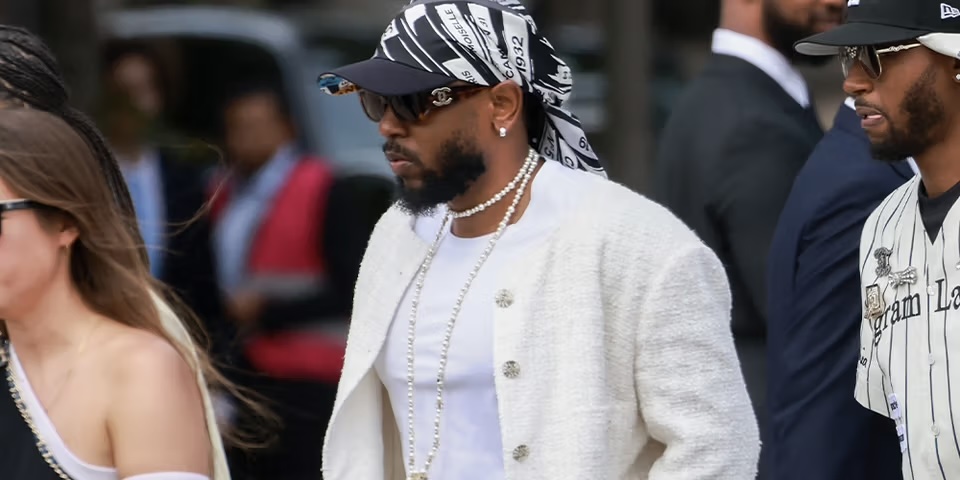
Hip-hop fashion completes the circle in the 2020s by hearkening back to previous styles and infusing high fashion and bespoke design into the apparel. Baggy pants, oversized silhouettes, and graphic tees that defined the late ’90s and the top of the 2000s have made strong comebacks, now updated for modern tastes. Artists like A$AP Rocky, Tyler, The Creator, Rihanna, Drake, Travis Scott, Kanye West, among a sea of others, have been leading the charge in bringing relaxed fits back with modern spins, often complemented by high-end materials and streetwear from established and emerging designers alike.
Hip-hop fashion completes the circle in the 2020s by hearkening back to previous styles and infusing high fashion and bespoke design into the apparel. Baggy pants, oversized silhouettes, and graphic tees that defined the late ’90s and the top of the 2000s have made strong comebacks, now updated for modern tastes. Artists like A$AP Rocky, Tyler, The Creator, Rihanna, Drake, Travis Scott, Kanye West, among a sea of others, have been leading the charge in bringing relaxed fits back with modern spins, often complemented by high-end materials and streetwear from established and emerging designers alike.
This combination of nostalgia with the most creative cuts proves that what was once considered “classic” is being reinterpreted for today’s fashion landscape and morphing into something entirely new.
Another defining feature for high-end 2020s has been customization. More and more, designers and artists are turning to one-of-a-kind pieces that capture a person’s individuality, disrupting traditional fashion norms. From custom embroidery on oversized jackets to perfectly fitting pants, the collaboration between high-end brands and independent designers is creating singular products. These custom designs, harking back both to nostalgia and to avant-garde sensibilities, have gained global appeal. Hip hop keeps up with fashion as it further melds comfort with luxury.
The long-standing relationship between hip-hop and sportswear brands like Nike and Adidas exists to this day but is more elaborate nowadays with the likes of Off-White, Balenciaga, and Rick Owens. Working together, artists and designers reconceptualize the relationship between streetwear and high fashion to such an extent that what once was “street style” today, in fact, is global luxury fashion.
Sneakers: A Culture of Exclusivity and Creative Innovation
Sneakers have stayed at the heart of hip hop fashion throughout the 2020s but have moved out of their position as simple footwear into an art form unto themselves. Of course, with the resale market in rare sneakers and exclusive collaborations continuing to explode in growth, new waves of innovation have been established in the 2020s, with sneaker designs treading the boundary of both comfort and aesthetic. Brands like Nike, Adidas, Asics, and New Balance continue their collaboration with the hip-hop world, but this time to make each release even more unique, special, and exclusive than it ever was.
The big trend of the 2020s is the revival of retro sneakers. Iconic models such as the Nike Air Jordan 1, Adidas Superstar, and Reebok Pump are being re-released with state-of-the-art modifications, merging both nostalgia and modern design elements into one. Still, it’s not all about harking back in time-new models are also carrying innovative materials and styles in a comfortable marriage of tradition and innovation.
Moreover, digital sneakers and NFTs have come to complete the culture of sneakers in the 2020s, furthering it into the virtual world. For the first time, it’s possible for fans and collectors to own ultra-rare, limited-edition virtual sneakers, tapping into an entirely new form of exclusivity. This digital realm gives artists and fans alike the opportunity to express themselves in ways that weren’t previously possible, pushing the boundaries of what sneakers can represent in both the physical and virtual spaces.
Jewelry: Elevating the Bling to New Heights
Hip-hop jewelry of the 2020s has been about hyper-luxury, creativity, and exclusivity. Yes, the old “bling” is still a core part, but the move has gone from bling diamonds to rare materials and one-of-a-kind pieces. Custom diamond chains are a mainstay, but now artists wear pendants in the shape of personal symbols, necklaces crafted from unique stones, and creative designs that really focus on the craftsmanship.
One of the defining trends in 2020s hip-hop jewelry, growing in importance, is luxury timepieces. Richard Mille, Patek Philippe, and Audemars Piguet have become huge status symbols, with Offset, Jay-Z, and Travis Scott among the many artists who regularly sport these six- or seven-figure watches. Gone are the “bust-down” watches of yore, splayed entirely in diamonds; these days, more refined, intricate pieces rule the day, communicating not just wealth but an abiding appreciation for high craft.
Apart from timepieces, personalized jewelry has become way more meaningful than ever. Artists invest in custom pieces that represent their identity, journey, and creative vision. Everything from large, diamond-encrusted crosses to intricate, one-of-a-kind pendants and chains with rare stones has become a major statement of individuality and strength. Even grills, once considered the most ephemeral of expressions, are now being made to order with everything from personal lyrics to symbolic motifs.
A Return to the Past with a Future-Focused Mindset
The 2020s in hip-hop fashion and jewelry is a beautiful mix of nostalgia and forward-thinking innovation. The resurgence of things like baggy pants, oversized clothing, and grills parallels an expansion into high-end craftsmanship and personalized designs regarding culture, including timepieces. Jewelry today is not about opulence; it’s all about exclusivity and storytelling, with artists finding unique pieces that are innovative but celebrate the style that defined their culture. This era is a testament to how hip-hop creatively explored both the past and future. What once was an underground movement birthed on the streets of the Bronx has become one of the most influential global cultural forces. The influence of hip hop in fashion, sneaker, and jewelry industries is ever-increasing and has already modified not only the fashion industry but also the way people present their personal style.
Honorable Mention
Virgil Abloh

Redefining Hip Hop Fashion & Will Never Be Forgotten
Virgil Abloh was more than just a designer. He was a cultural architect who redefined the boundaries between streetwear, high fashion, and music. As the artistic director of Louis Vuitton’s men’s wear and the founder of Off-White, Abloh became one of the most influential figures in fashion, shaping the way the world viewed the relationship between luxury and urban culture. His rise to prominence was rooted in his unique ability to mix the worlds of hip hop and high fashion, with Kanye West being a close collaborator in his early years. Abloh’s signature approach to design-irony, deconstruction, and the merging of opposites-redefined streetwear into a respected form of art. His work was a direct reflection of the ethos of hip-hop: innovation, self-expression, and pushing boundaries. Be it his iconic “the ten” with Nike or the game-changing work he was doing at Louis Vuitton, Virgil’s legacy surpasses fashion; he remains an icon for the rise of Black designers in industries that hardly represented them. His untimely death in 2021 left a huge void, but the influence he had on fashion, culture, and the hip-hop community will keep ringing for ages.